
Space Heroes — Project Lead
Tech: Unity, C#, Unity UI, ScriptableObjects, NavMesh, Editor Tooling, Custom Persistence, Analytics, Client-side Auth/Leaderboards/Cloud Save
Project Overview
Studio: Udo Games
Team Size: 7 (Developers, Artists, Designers)
Role: Project Development Lead
Timeline: 6 months to first release + ~6 months of content updates
Store Pages:
Google Play ·
App Store
Gameplay Videos: Watch
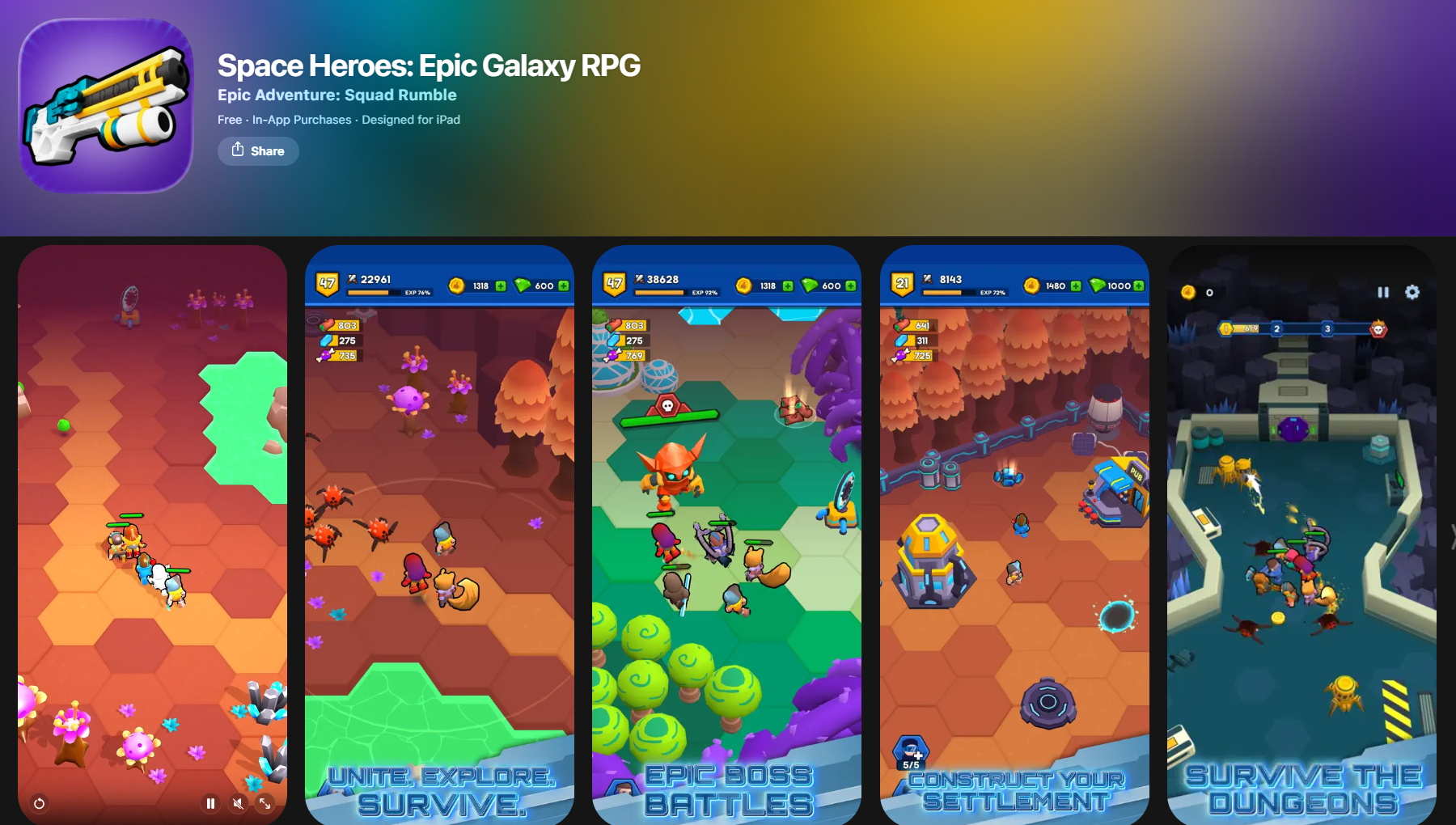
Space Heroes is a mobile, casual team-building RPG with an open-world structure, repeatable combat modes, hero progression, and a town/meta layer. The project’s technical complexity comes from scaling large content volumes (heroes, enemies, zones, quests) while maintaining stable saves, reliable navigation across streamed world regions, and efficient iteration during post-launch update cycles.
My Role
- Owned the project end-to-end as Project Development Lead for ~1 year, responsible for technical direction and day-to-day execution.
- Designed and implemented the majority of core gameplay + meta systems (characters, combat, enemies, town/buildings/menus, quests, dungeons, challenges).
- Managed and mentored other developers on the project:
- Defined technical direction and system boundaries.
- Reviewed implementations for correctness, maintainability, and production safety.
- Coordinated task ownership to reduce overlap and unblock parallel work.
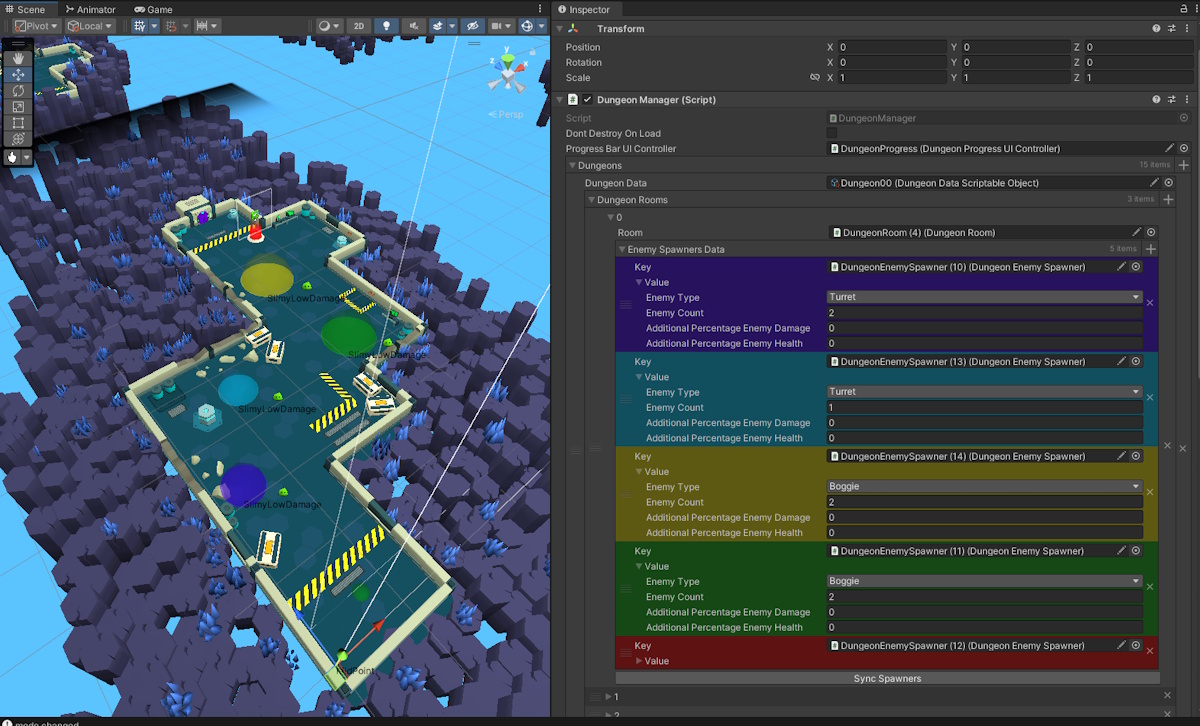
- Built designer-facing tooling (hexagon-base world editor + dungeon editor workflow) to scale level production and reduce manual setup.
- Took responsibility for production safety: save/load, persistent state restoration, version compatibility, and regression risk during content updates.
- Acted as Project Manager during later update cycles—owning prioritization, release readiness, and scope trade-offs alongside implementation.
World & Level Editor (Hexagon Base)
A major part of the project was enabling content production at scale through a custom hex-grid world editor.
- Implemented a hexagon-based level editor for designers.
- Designed the world to be region-based:
- The map is split into regions by size.
- The editor manages which objects belong to which region.
- Built runtime systems to support dynamic region load/unload based on character position.
- Implemented a complementary dungeon editor workflow for structured encounter content.
Runtime Streaming & Navigation Safety
To keep an open-world structure performant on mobile, the world was built to stream content in and out safely.
- Implemented region-based loading boundaries to avoid loading the entire world at once.
- Supported navigation across streamed regions with runtime-oriented systems.
- Invested heavily in stability fixes around world streaming edge cases (e.g., missing area references, unloaded objects behavior, and safe defaults).
Combat, Characters & Enemy Architecture
The gameplay layer was built to support many unique heroes and enemies without rewriting core logic.
- Character movement + interaction system foundations, iterated early and continuously.
- Combat system supporting unique hero and enemy behaviors (attacks, inflictors, damageables, effects).
- Enemy management + spawning systems designed to scale across:
- Open world encounters
- Dungeons
- Challenge modes
Recruitment, Management & Progression (Meta Layer)
The meta layer was built around stable data and UI-driven flows—because post-launch iteration happens here first.
- Implemented the recruitment and character management loop (selection, upgrades, training, rarity/progression data).
- Built town/building/menu architecture to support:
- Multiple upgrade surfaces
- Unlock gating
- Safe iteration on UI-heavy systems during live updates
Quests, Dungeons & Repeatable Modes
To support long-term play and updates, the project includes multiple repeatable content loops.
- Quest framework + quest UI and state management.
- Daily / weekly quest systems and related menu flows.
- Dungeon mode with dedicated scene/data controllers and robust “don’t lose progress/resources” edge-case handling.
- Challenge modes (e.g., arena-style flows) designed to reuse combat + progression systems.
Persistence & Version Compatibility
Because this project shipped and then ran through content updates, persistence correctness was treated as a first-class system.
- Built and maintained a custom persistent data layer across core systems (characters, menus, quests, dungeons).
- Ensured player progression remained valid across updates by treating IDs and data consistency as a production risk area.
- Shipped targeted fixes for compatibility issues when older saved data needed to remain stable through content and system changes.
Client-Side Online Services
The project includes online-facing features; my scope was the Unity client integration and safety.
- Implemented and maintained client-side flows for:
- Authentication entry points and account linking patterns
- Online leaderboards + season/reward UI surfaces
- Cloud save integration and recovery flows
- Focused on production-readiness: fail-safe UI, retries/timeouts, and graceful degradation when services are unavailable.